


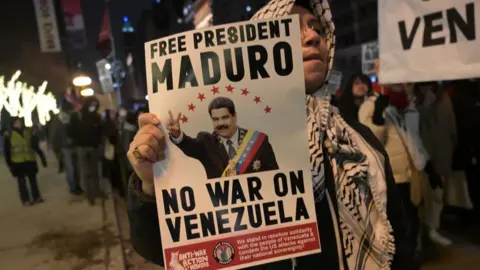
This past Monday, a shackled, jumpsuit-clad Nicholas Maduro stepped off a armed forces helicopter in Manhattan, accompanied by federal marshals.
The Caracas chief had spent the night in a notorious federal detention center in Brooklyn, prior to authorities moved him to a Manhattan federal building to answer to criminal charges.
The chief law enforcement officer has stated Maduro was taken to the US to "answer for his alleged crimes".
But jurisprudence authorities challenge the legality of the administration's actions, and argue the US may have infringed upon global treaties regulating the military intervention. Under American law, however, the US's actions occupy a legal grey area that may still lead to Maduro standing trial, regardless of the events that brought him there.
The US insists its actions were legally justified. The administration has charged Maduro of "narco-terrorism" and abetting the transport of "vast amounts" of narcotics to the US.
"All personnel involved operated with utmost professionalism, decisively, and in strict accordance with US law and standard procedures," the top legal official said in a statement.
Maduro has repeatedly refuted US claims that he runs an illegal drug operation, and in the federal courthouse in New York on Monday he entered a plea of innocent.
Global Legal and Action Questions
Although the indictments are related to drugs, the US prosecution of Maduro follows years of condemnation of his governance of Venezuela from the United Nations and allies.
In 2020, UN fact-finders said Maduro's government had perpetrated "egregious violations" constituting human rights atrocities - and that the president and other high-ranking members were connected. The US and some of its partners have also charged Maduro of manipulating votes, and withheld recognition of him as the legitimate president.
Maduro's alleged ties with narco-trafficking organizations are the centerpiece of this prosecution, yet the US tactics in bringing him to a US judge to respond to these allegations are also facing review.
Conducting a covert action in Venezuela and whisking Maduro out of the country under the cover of darkness was "a clear violation under the UN Charter," said a professor at a law school.
Legal authorities highlighted a number of problems presented by the US operation.
The UN Charter bans members from threatening or using force against other nations. It permits "self-defense against an imminent armed attack" but that danger must be looming, experts said. The other exception occurs when the UN Security Council approves such an operation, which the US did not obtain before it acted in Venezuela.
International law would regard the illicit narcotics allegations the US claims against Maduro to be a criminal justice issue, analysts argue, not a armed aggression that might permit one country to take armed action against another.
In public statements, the government has characterised the mission as, in the words of the top diplomat, "basically a law enforcement function", rather than an declaration of war.
Historical Parallels and Domestic Legal Debate
Maduro has been indicted on narco-terrorism counts in the US since 2020; the federal prosecutors has now issued a revised - or revised - indictment against the Venezuelan leader. The executive branch contends it is now enforcing it.
"The mission was carried out to facilitate an pending indictment related to large-scale illicit drug trade and related offenses that have fuelled violence, created regional instability, and contributed directly to the opioid epidemic causing fatalities in the US," the Attorney General said in her remarks.
But since the mission, several legal experts have said the US disregarded global norms by extracting Maduro out of Venezuela on its own.
"A country cannot enter another sovereign nation and apprehend citizens," said an authority in international criminal law. "If the US wants to detain someone in another country, the established method to do that is extradition."
Regardless of whether an individual faces indictment in America, "The United States has no legal standing to travel globally enforcing an detention order in the lands of other sovereign states," she said.
Maduro's legal team in the Manhattan courtroom on Monday said they would challenge the propriety of the US operation which took him from Caracas to New York.
There's also a long-running jurisprudential discussion about whether presidents must comply with the UN Charter. The US Constitution views accords the country ratifies to be the "supreme law of the land".
But there's a clear historic example of a presidential administration contending it did not have to observe the charter.
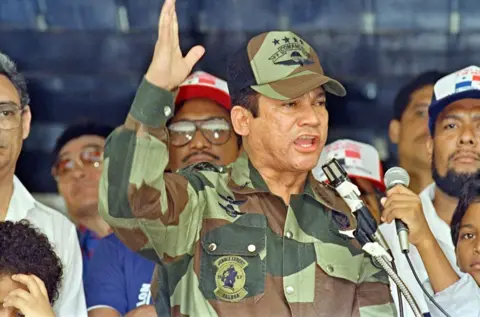
In 1989, the Bush White House captured Panama's military leader Manuel Noriega and brought him to the US to face drug trafficking charges.
An restricted legal opinion from the time stated that the president had the legal authority to order the FBI to apprehend individuals who flouted US law, "regardless of whether those actions breach traditional state practice" - including the UN Charter.
The writer of that opinion, William Barr, later served as the US top prosecutor and brought the original 2020 accusation against Maduro.
However, the opinion's reasoning later came under questioning from jurists. US the judiciary have not made a definitive judgment on the question.
US Executive Authority and Legal Control
In the US, the question of whether this action violated any federal regulations is complex.
The US Constitution gives Congress the authority to authorize military force, but makes the president in charge of the military.
A Nixon-era law called the War Powers Resolution imposes constraints on the president's ability to use military force. It requires the president to notify Congress before committing US troops abroad "whenever possible," and notify Congress within 48 hours of initiating an operation.
The government did not provide Congress a heads up before the operation in Venezuela "to ensure its success," a top official said.
However, several {presidents|commanders


